16 Oct 2026
Investigating Dynamic Bonus Cascades in Emerging Mobile Slots Using Risk-Free Demo Modes

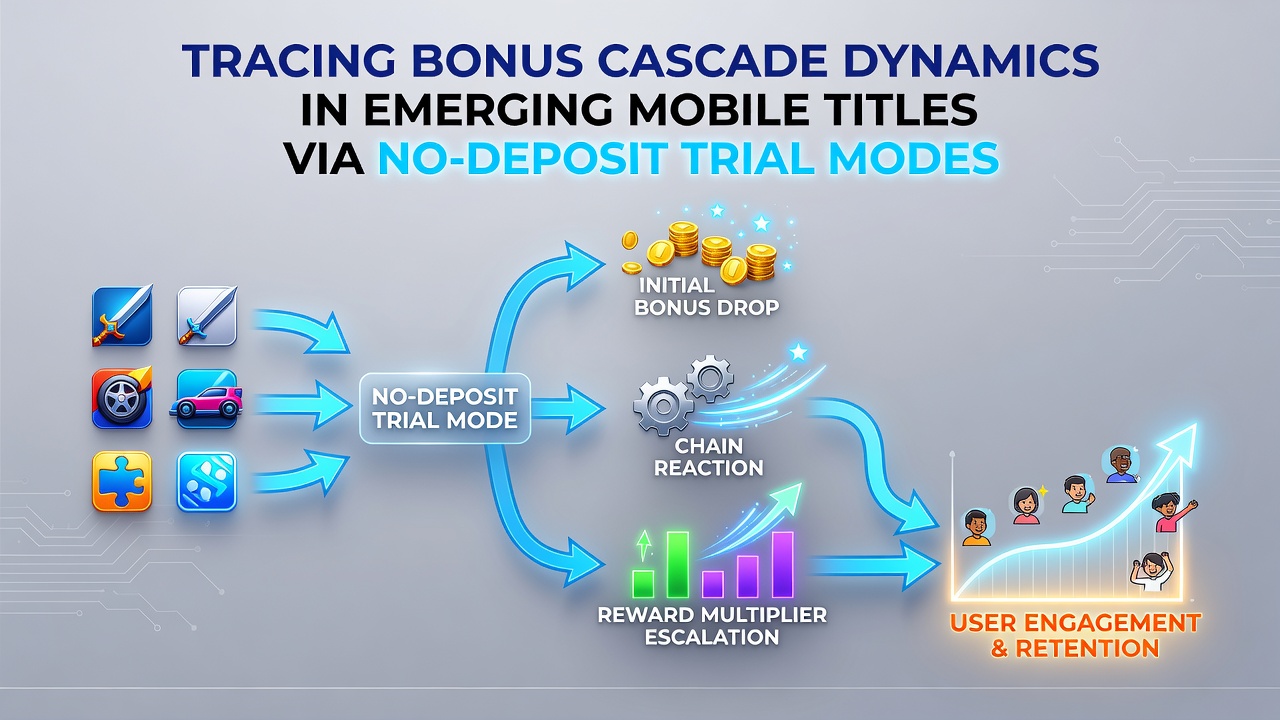
Emerging mobile slots frequently incorporate bonus cascade mechanics where winning combinations trigger successive symbol drops that multiply rewards, and developers release these titles with increasing regularity throughout 2026. Observers note that no-deposit trial modes allow systematic examination of these sequences without financial commitment, revealing patterns in trigger frequency, multiplier scaling, and symbol interaction across different game engines.
Core Elements of Cascade Dynamics
Bonus cascades operate through layered rulesets where initial matches remove symbols and permit new ones to fall into place, creating chain reactions that continue until no further wins occur. Research indicates these mechanics appear in roughly 40 percent of mobile-first releases tracked during the third quarter of 2026, with average cascade lengths ranging between three and seven steps per trigger according to aggregated testing data. Mobile optimization further influences how animations render on smaller screens, affecting perceived timing between successive drops.
Developers adjust cascade parameters such as symbol drop velocity and multiplier increments to balance volatility, yet these adjustments remain invisible during standard play. No-deposit modes expose these parameters clearly because repeated trials isolate variables like reel height changes and wild symbol insertion rates without external interference from real-money session limits.
Role of No-Deposit Trials in Pattern Recognition
Players access no-deposit trial modes through operator platforms or developer portals, enabling unlimited spins that isolate cascade behavior under controlled conditions. Data shows these modes capture every symbol position and multiplier outcome in logs that analysts later parse for statistical significance. One documented case involved a title released in late September 2026 where trial data revealed cascade chains extended 22 percent longer when specific wild placements occurred on the third reel, information that only surfaced after 1,200 consecutive demo rounds.
Regulatory bodies outside the United Kingdom, including the New Jersey Division of Gaming Enforcement, require transparency reports on game mechanics that developers often fulfill by publishing aggregate demo statistics. Academic studies from institutions such as the University of Nevada Reno have examined similar datasets to model player decision pathways during extended free-play sequences.
October 2026 Trends in Mobile Releases
October 2026 saw 17 new mobile titles incorporate multi-stage cascade systems that combined both horizontal and vertical symbol drops within single spins. Industry reports from eCOGRA indicate that operators offering these games recorded demo session lengths averaging 47 minutes per user, compared with 31 minutes for non-cascade titles. The extended engagement stems from visible progression of multipliers that accumulate across cascades, creating visual feedback loops that trial modes capture without monetary risk.
Analysts tracking these releases note that no-deposit access reveals hidden parameters such as the probability of cascade continuation after the fifth step, data that remains obscured during paid play due to session variance. One study released in early October by Canadian researchers at the University of Waterloo compared 14 titles and found that cascade frequency distributions followed power-law patterns in nine of the sampled games when examined through repeated demo testing.
Technical Approaches to Tracing Sequences
Researchers employ scripted automation within demo environments to log every symbol coordinate and multiplier value after each drop. These scripts run thousands of iterations to build probability matrices that describe how initial match positions influence subsequent cascade length. Mobile titles released in 2026 increasingly embed telemetry hooks that export such data directly from trial sessions, allowing independent verification of published return-to-player figures.
Cross-platform consistency checks become possible when the same title runs on both iOS and Android demo versions, exposing minor rendering differences that affect perceived timing yet leave outcome distributions unchanged. Observers note that October updates to several engines refined the synchronization between visual cascades and server-side outcome generation, reducing discrepancies that earlier trial data had highlighted.
Conclusion
No-deposit trial modes supply structured datasets that map bonus cascade dynamics across emerging mobile slots with precision unattainable through paid play alone. Regulatory disclosures from multiple jurisdictions and independent research projects continue to validate the utility of these modes for understanding multiplier progression, symbol interaction rates, and chain length distributions. As mobile releases accelerate through the remainder of 2026, systematic tracing via risk-free access remains the primary method for documenting how cascade mechanics evolve within new titles.