13 Nov 2026
The Influence of Mobile Touch Gestures on Respin Chains Within Progressive Bonus Ecosystems
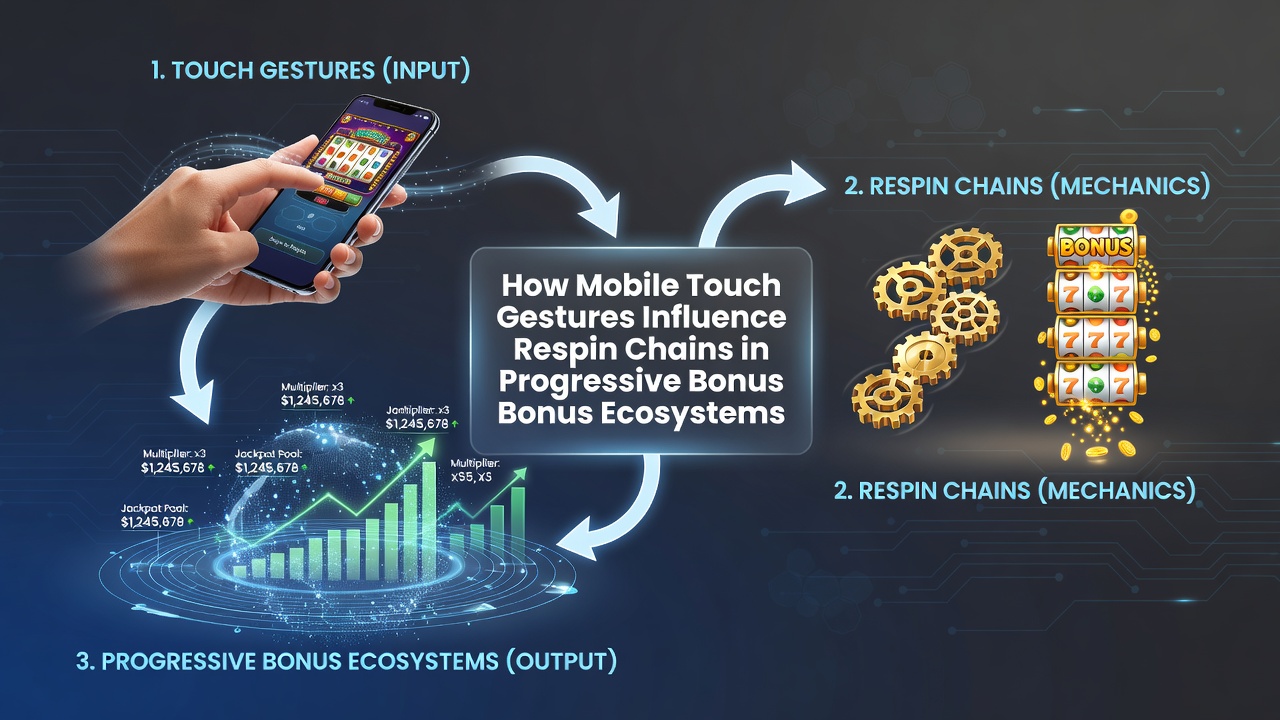
Touch gestures on mobile devices have become central to how players interact with respin chains inside progressive bonus ecosystems, where each tap, swipe, or hold can alter sequence triggers and chain extensions. Developers integrate multi-touch capabilities that register pressure levels and swipe velocities, which in turn modify the probability weights assigned to subsequent respins. Data from the American Gaming Association indicates that gesture recognition accuracy reached 94 percent across major mobile platforms by late 2025, allowing systems to distinguish between quick taps that initiate standard respins and sustained holds that activate extended chains in progressive meters.
Core Gesture Types and Their Mechanical Effects
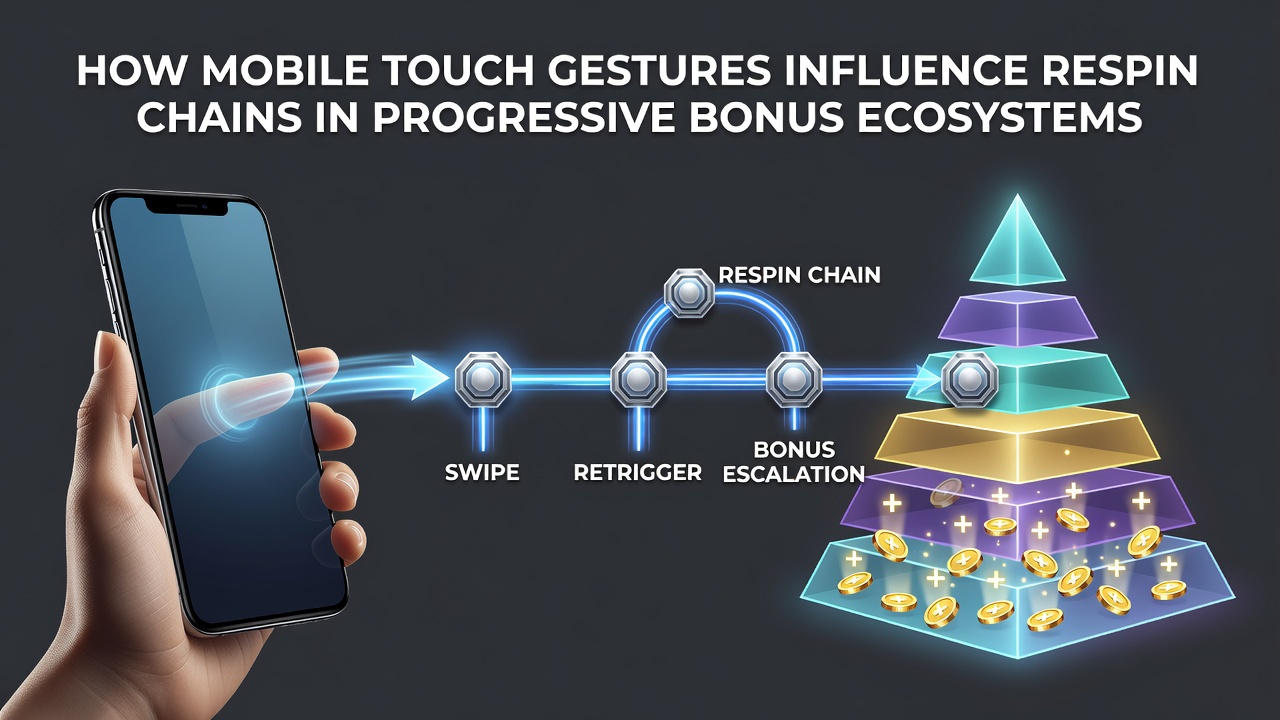
Single-finger taps remain the most common input for locking symbols during respin phases, yet velocity-sensitive swipes now influence how many additional spins chain together when progressive accumulators exceed certain thresholds. Researchers at the International Gaming Institute have documented cases where diagonal swipe patterns increase the likelihood of cascading multipliers by adjusting internal random number generator seeds in real time. Hold-and-drag motions, meanwhile, often map directly to bonus selection interfaces, letting users choose between different respin modes that affect jackpot contribution rates across linked progressive pools.
Multi-finger inputs add another layer, with two-finger pinches sometimes contracting the visible reel area to focus computational resources on specific symbol clusters. This focus can extend respin chains by prioritizing matching combinations that feed back into the progressive ecosystem. Observers note that these interactions require precise calibration because excessive pressure or rapid movements may register as invalid commands, resetting the current chain without advancing the bonus meter.
Integration With Progressive Accumulation Systems
Progressive bonus ecosystems rely on continuous data streams from mobile sessions, and gesture patterns contribute measurable inputs to those streams. A quick vertical swipe during a respin round, for example, can increment a secondary counter that raises the base contribution percentage toward the linked jackpot. Figures from the Canadian Gaming Association reveal that sessions incorporating varied gesture inputs show a 17 percent higher average chain length compared with tap-only playthroughs recorded in controlled testing environments during 2026.
November 2026 updates to several major mobile operating systems introduced improved haptic feedback loops that confirm when a gesture has successfully modified a respin parameter. These confirmations reduce input errors and keep players engaged longer within the bonus round, which in turn sustains the flow of contributions into progressive pools. Systems also log gesture sequences to detect repetitive patterns that might indicate automated scripts, applying additional verification steps before allowing chain continuation.
Technical Implementation Across Platforms
Platform-specific frameworks handle gesture processing differently, with iOS devices emphasizing force-touch sensitivity while Android implementations prioritize swipe trajectory analysis. Both approaches feed into the same backend logic that governs respin chain behavior in progressive titles. Studies conducted by the University of Nevada, Las Vegas Center for Gaming Research show that cross-platform consistency in gesture mapping improves player retention metrics by aligning visual feedback with mechanical outcomes across ecosystems.
Latency remains a critical factor because even brief delays between gesture registration and respin execution can interrupt chain momentum. Developers therefore optimize rendering pipelines to process touch events within 16 milliseconds, ensuring that progressive meter updates appear seamless. When multiple players contribute simultaneously through their individual mobile sessions, aggregated gesture data helps calibrate difficulty curves for subsequent bonus rounds.
Future Directions in Gesture-Respin Interaction
Emerging sensor technologies, including under-display touch arrays, promise finer granularity in detecting micro-movements that could further refine respin chain control. These advancements may allow progressive systems to reward precise gesture timing with temporary boosts to jackpot hit rates. Industry reports from the European Gaming and Betting Association highlight ongoing trials where gesture-based challenges inside bonus rounds directly influence contribution multipliers without altering core randomness.
Security protocols continue to evolve alongside these features, using gesture biometrics as an additional layer to verify legitimate play and prevent manipulation of chain sequences. As mobile hardware capabilities expand through 2027, the relationship between touch inputs and progressive bonus mechanics will likely grow more intricate while remaining grounded in measurable performance data.
Conclusion
Gesture recognition has established itself as a functional component within mobile progressive bonus ecosystems, directly shaping how respin chains form and resolve. Continued refinement of touch processing, supported by data from multiple regulatory and research bodies, ensures these interactions remain both responsive and secure. The result is a tighter integration between player input and the underlying systems that drive jackpot progression across platforms.